

- Home
- Fertility Law in BC
- ivf and fertility clinic law
IVF & Fertility Clinic Law in BC
Fertility clinic agreements are legally binding. Here is what you want to know.
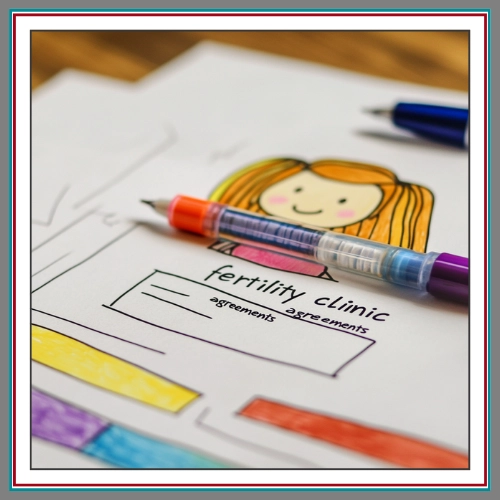
When people think about IVF, they think about the medical process. The legal side tends to come as a surprise. The consent agreements you sign at a fertility clinic are not just forms. They are legally binding documents that can determine who owns embryos, who has the right to make decisions about them, and what happens if your spousal relationship changes.
BC has a legal framework for assisted reproduction, but that framework does not answer every question automatically. A lot depends on what you agree to in writing, and when. Getting clear on the legal side before you begin, or as early in the process as possible, protects everyone involved.
We help individuals and couples navigate the legal dimensions of IVF and fertility clinic agreements, including what to watch for before you sign, and what your options are when circumstances change.
Who owns embryos after separation in BC?
This is one an often difficult and emotionally charged question. The short answer is that BC does not have clear statutory rules specifically governing embryo disputes. That means courts are working with a combination of contract law, the federal Assisted Human Reproduction Act, and general family law principles.
What typically matters most is what the parties agreed to in their fertility clinic consent forms. These forms usually address what happens to stored embryos in the event of:
- Separation or divorce.
- The death of one or both parties.
- One party withdrawing consent for future use.
- The relationship ending before embryos are used.
If the consent forms are silent on these scenarios, or if the parties disagree about what they meant, the dispute becomes legally complex. Courts in other Canadian provinces have grappled with these cases, and BC courts are likely to consider those decisions as guidance. The outcomes are not always predictable.
This is one area where getting legal advice before starting fertility treatment, not after a relationship ends, makes an enormous difference.
What happens if consent is withdrawn?
Under Canadian law, both parties to an IVF process generally have the right to withdraw consent to the use of embryos at any time before those embryos are used. That means one partner can effectively block the other from proceeding with a frozen embryo transfer, even if the embryos already exist.
This is a deeply personal situation, and the law reflects a principle of bodily autonomy: no one can be compelled to become a genetic parent against their will. But that principle can create significant hardship for the other party, particularly if the embryos represent their only realistic path to biological parenthood.
Practically speaking, if you are in this situation, you need to know:
- What your clinic consent forms actually say about withdrawal of consent.
- Whether there are any agreed timelines or notice requirements before withdrawal takes effect.
- What legal avenues exist to seek clarity or dispute resolution.
- Whether a court would intervene, and under what circumstances.
There are no easy answers here. But there are informed ones. We help clients understand where they stand before decisions become irreversible.
Understanding your rights before, during, and after IVF

The legal questions in fertility treatment do not all arrive at once. Different issues arise at different stages, and knowing what to watch for at each stage makes you a more informed participant in the process.
Before treatment begins:
- Review your clinic consent agreements carefully, ideally with legal counsel before signing.
- If you are in a relationship, consider whether a co-parenting or relationship agreement should address what happens to embryos if the relationship ends.
- Understand what the clinic's own policies are on storage, usage, and disposal of embryos.
During treatment:
- Keep copies of every consent form you sign and every amendment you are asked to make.
- If your relationship status or intentions change, seek legal advice promptly. Timing matters.
- If you are using donor gametes (eggs or sperm), make sure any donor agreements are legally sound.
After treatment, or after a relationship ends:
- If you have frozen embryos in storage and you are separating, do not assume the clinic will manage the legal question for you.
- Seek legal advice before agreeing to anything with your former partner about the embryos.
- Understand your rights regarding parentage if a child is born from a previously frozen embryo after separation.
Fertility treatment is one of the most hopeful things a person can undertake. The legal side exists to protect that hope, not complicate it. Our job is to make sure the legal framework is working for you.
This article is for general informational purposes only and does not constitute legal advice. Family law is fact-specific and the law changes. Reading this does not create a lawyer-client relationship with Pathway Legal. For advice about your situation, consult a qualified BC family law lawyer.

Content written by:
Val Hemminger, divorce lawyer with heart, founder of Pathway Legal, terrier lover, Mom, fun person, and because every great legal team needs at least one ADHD powered person
Not Sure Where You Stand? Talk to One of Our Lawyers
Something has shifted, and you are not sure what it means yet. That is exactly the right time to get clarity, not after you have waited too long and deadlines have passed.
Schedule a consultation with Pathway Legal.
Our initial consultation is real legal guidance, not a sales pitch. And we stand behind it: if you do not feel you received genuine value, we will refund your initial consultation fee. No questions asked.*
In the years we have done this, almost no one has asked for their money back.
*Unlike most law firms, our initial consultation is not free. Your time with one of our lawyers is real legal guidance, not a sales pitch. A one-hour conversation that helps you understand your rights, your timelines, and your options is one of the smallest investments you can make when the stakes are high.







FAX: 833-250-7771
Meeting Locations
Money-back guarantee for your initial consultation
We are SO confident you’ll be impressed with your lawyer and the support you receive at your first appointment, we’ll refund the initial consultation fee if you’re not completely satisfied.
Meeting Locations
Money-back guarantee for your initial consultation
We are SO confident you’ll be impressed with your lawyer and the support you receive at your first appointment, we’ll refund the initial consultation fee if you’re not completely satisfied.
Pathway Legal Law Corporation, Family Law Lawyers. All rights reserved Val Hemminger
Your Privacy Sitemap Contact Us Legal Disclaimer SMS T&C's
Copyright © [2020] –
It is with our honour and gratitude that we live, work, and play on the traditional territory of the Coast Salish peoples–Sḵwx̱wú7mesh (Squamish), Stó:lō and Səl̓ílwətaʔ/Selilwitulh (Tsleil-Waututh) and xʷməθkʷəy̓əm (Musqueam) Nations.