

- Home
- Where to Start
Where To Start With Divorce in BC
Seven clear steps, whether you are just starting to think about it or already on your way.
If you have found this page, you are probably somewhere in the middle of one of the harder seasons of your life. You may be the one who has decided to end the marriage. You may be the one who just found out. You may be somewhere in between, not sure yet what you want but feeling the ground shift.
Wherever you are in that, this page is a starting point. Seven steps that give you a framework for moving through this with as much clarity, as much financial protection, and as little unnecessary damage as possible.
You do not need to work through all of it at once. Start where you are.
One thing before anything else: do not sign any new agreements, move significant money out of joint accounts, or make major changes to your living situation without first speaking to a family lawyer. Some actions, once taken, are very difficult to undo.
Seven
steps to getting started
1. Set
the tone with your first conversation
If you are the one ending the relationship, the first conversation matters more than most people realize. Not because it will resolve everything, but because it establishes what kind of process this is going to be.
This is not the conversation to relitigate the relationship, assign blame, or negotiate specific terms. It is the conversation to communicate clearly that you are separating and that you want to do it as constructively as possible. Keep it short. Keep it calm. Let the other person absorb the information before the next conversations begin.
If you are on the receiving end, you do not need to respond to everything in that first conversation. It is reasonable to take time to process before engaging in the practical questions.
2. Get
legal advice before you negotiate anything
This is the step most people delay and later wish they had done first. You cannot negotiate from an informed position if you do not know what your rights are.
An initial consultation with a BC family law lawyer tells you what the law says about your specific situation: how property is divided under the Family Law Act, how child support is calculated under the Federal Child Support Guidelines, whether spousal support is likely to apply and in what amount, and what parenting arrangements look like in practice. You are not retaining a lawyer for the whole file. You are buying information before you start.
BC family law has excluded property rules that most people have never heard of. Assets you owned before the relationship, inheritances, and certain gifts may be protected. But the increase in their value during the relationship may not be. This distinction affects many people significantly. Understand your position before you agree to anything.
3. Talk
to your children, if you have them
Children need three things from this conversation: to know they are loved by both parents, to know this is not their fault, and to know they will continue to see both of you. Everything else is secondary.
Tell them together if at all possible. A unified message from both parents is far more reassuring than hearing two separate versions of events. Keep it age-appropriate. Answer their questions honestly without volunteering adult details they do not need to carry.
This is not one conversation. It is the beginning of an ongoing dialogue. What matters most is not that you find perfect words in the first conversation, but that you remain present, available, and honest in the ones that follow.
Children are resilient when they are supported. Their outcomes depend far more on the level of ongoing conflict between their parents than on the separation itself. Keeping them out of adult conflict is the most important thing you can do for them through this process.
4. Protect
your finances immediately
The financial steps you take in the first weeks of separation can significantly affect your position throughout the process. This is not about being adversarial. It is about being informed and protected.
- Open your own bank account and direct your income there.
- Get a credit card in your own name if you do not have one.
- Document what exists: accounts, investments, debts, property. Take screenshots or copies of statements you can access online. Go back as far as the system allows.
- Monitor joint accounts and ensure bills are being paid, because missed payments affect your credit too.
- Do not move large amounts of money or close joint accounts without legal advice.
- Once a final agreement is reached, close all joint credit facilities.
The families who come through separation in the best financial position are almost always the ones who documented their financial picture early. The ones who leave financial decisions entirely to the other party often discover, too late, that the picture was very different from what they assumed.
5. Choose
your dispute resolution process
How you resolve your separation matters almost as much as what you resolve. The process you choose determines the cost, the timeline, how much control you retain over the outcome, and the damage done to whatever relationship needs to continue between you and the other parent.
Most families resolve their separation through a negotiated final separation agreement, sometimes with the help of a mediator, collaborative law process, or four-way meeting with both lawyers. Court is available when other options have genuinely failed, but it is the most expensive, slowest, and most damaging path for most families.
- Direct negotiation: works when both parties can communicate and the issues are not too complex.
- Lawyer-to-lawyer negotiation: both parties have legal representation but communicate through their lawyers.
- Mediation: a trained neutral mediator helps both parties reach agreement. Confidential, flexible, and less expensive than court.
- Collaborative law: both parties and both lawyers commit to reaching a resolution without court.
- Mediation-arbitration (med/arb): starts as mediation, shifts to a binding decision if agreement is not reached.
- Court: a judge decides. Most expensive, slowest, least predictable. Reserved for situations where other processes have genuinely failed.
6. Take
care of yourself
Separation is one of the most stressful experiences adults go through. The financial pressure, the uncertainty, the grief of a relationship ending, the weight of managing children through it, all of these land simultaneously and stay for months.
The clients who come through this process best are almost always the ones who invested in their own wellbeing alongside the legal process, not instead of it. Therapy. Exercise. Sleep. Time with people who support rather than inflame. Whatever works for you.
This is not soft advice. When you are depleted, you make worse decisions. You are more reactive in negotiations, less clear in your communications, and less able to advocate for what you actually need. Taking care of yourself is also taking care of your legal matter.
You do not have to wait for the legal process to resolve before you start building the life that comes next. The sooner you invest in your own health and support, the sooner you will have the clarity and stability to make good decisions throughout this process.
7.
Do
not assume. Document everything.
The families who run into the most trouble in separation are almost always the ones who operated on assumptions: assumptions about what the other party would agree to, assumptions about what documents were important, assumptions about what agreements were in place.
Do not discard documents because they look old or insignificant. Your lawyer will tell you what matters. Documents that look meaningless may turn out to be share certificates, property records, or access credentials for accounts you did not know existed.
Keep records of all significant decisions, communications, and events related to the separation, especially anything involving children, finances, or property. A contemporaneous record, kept at the time, is far more persuasive in any legal process than reconstructed recollections.
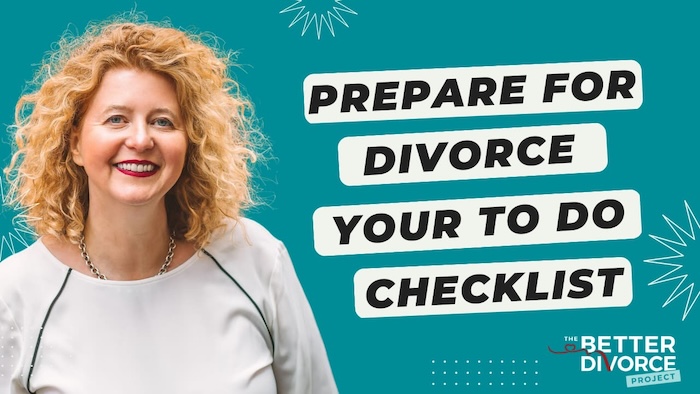
If you haven't watched it yet, spend 15 minutes watching Val Hemminger's video on our financial checklist page. It will give you a deeper understanding of the importance of what you are doing.
Particular care around parenting time: if you are exercising parenting time and the other party is interfering with it, document every incident. Date, what was supposed to happen, what actually happened, any communications that followed. If this ever becomes relevant in a legal proceeding, that log is your evidence.
Ready to talk through your situation?
You do not need to have everything figured out before reaching out. A consultation is simply a chance to understand your rights, your timelines, and your options. Backed by our money-back guarantee on the initial consultation fee.
pathwaylegal.ca/request-consultation.html | 778-557-5099
Go
deeper: articles for where you are right now
Use these pages to get more specific guidance based on your situation. Each one is a full article written for people at different points in the process.
How
Much Does a Divorce Cost in BC?
Real cost ranges for different types of separation and divorce processes in BC, including uncontested, mediated, collaborative, and contested litigation. What drives costs up and what keeps them down.
Choosing the Right Divorce Lawyer in BC
What to look for, what questions to ask at a first consultation, and what the answers should tell you. A practical evaluation guide you can bring to any lawyer meeting.
Separation and Divorce in BC: What is the Difference?
What separation actually triggers legally in BC, what divorce does and does not resolve, and what a final separation agreement actually covers. Start here if you are confused about the terminology.
Financial Preparation: Your Divorce To-Do List
A practical, step-by-step checklist covering financial documents, legal documents, privacy protection, first conversations, and dispute resolution options. Includes two real client stories.
Divorcing Without Going to Court
Six concrete reasons why avoiding court serves most families better, what the alternatives look like in practice, and when court is genuinely the right answer.
Divorce with Children in BC
A complete guide to navigating separation when children are involved: parenting arrangements, child support, talking to children, and keeping their wellbeing at the centre of every decision.
Managing a High-Conflict Divorce
For situations where the other party is uncooperative, making false allegations, or refusing to engage constructively. What high conflict looks like legally and what options are available.
Family Violence and Divorce in BC
If safety is a concern, this is the right starting point. What protections are available, how family violence affects parenting decisions, and how to get help.
Google reviews for Pathway Legal

Rebekah Veilleux

If you need a reliable and effective Divorce and Family Law firm that excels in mediation and strives for positive outcomes, I can confidently say that Pathway Legal is the best choice. They truly care about their clients' well-being and deliver exceptional service, providing a peaceful resolution for families in need. Thank you, Pathway Legal, for guiding me through this difficult time and securing a brighter future for me and my children.

Lana Morris
I had the pleasure of having both Katie Sutherland and Val Hemminger as my lawyers! They both have a passion for family law and it showed in each and evening time I met with them. Not only were they both professional but they truly care about their clients… with both of them I could cry, express my frustrations and even though this was a hard year… we even had a lot of laughs together. Val and Katie always put my children first and encouraged me to seek counselling for myself! It was never only about the law to either of them, it was first and foremost about family.

Nick Accarion
I highly recommend this firm because they were able to understand our family dynamics even though we were coming from a place of desperation and it was complicated. They were able to navigate our needs in a courteous professional affordable way, and make our separation amicable. I hope to never go through an experience like this again but knowing there's a firm like this made it much easier for me and my loved ones. Highly recommend.
You do not have to figure this out alone.
A consultation with one of our lawyers is a chance to understand where you stand, what your options are, and what the path forward looks like. You don't need to have everything figured out before you reach out. Backed by our money-back guarantee on the initial consultation fee.
pathwaylegal.ca/request-consultation.html | 778-557-5099

Ask Journey
Real questions. Straight answers. No legal jargon required.
Yes. Most people who eventually separate spend a significant period of uncertainty before anything becomes clear. Reading and gathering information now does not commit you to anything. It means that if and when you do make a decision, you will make it from an informed place rather than a reactive one. Understanding what separation looks like in BC, what your rights are, and what the process involves, costs you nothing and helps you nothing but.
If direct conversation is not safe or not productive, you have options. A therapist or mediator can facilitate a first structured conversation. Your respective lawyers can communicate on your behalf from the start.
In some high-conflict situations, the practical work of separation happens entirely through lawyers and structured processes without the parties communicating directly at all. The conversation does not have to happen between you if it cannot happen safely or constructively. What needs to happen is that the process starts moving.
A few paths are worth knowing. Unbundled legal services let you hire a lawyer for a single consultation or specific task without full representation, which costs significantly less. Legal aid in BC is available for those who meet income thresholds, particularly where children or safety are involved. Law school clinics and non-profit legal services provide some level of assistance. Family law duty counsel is available at courthouses on specific days for urgent matters.
Going without any legal advice is a risk, particularly before you sign anything. Even a single hour with a lawyer, focused specifically on understanding your situation, is an investment worth making.
Outside support for children during a family separation is not a sign that something has gone wrong. It is a sign that you are taking their needs seriously. Play therapists and art therapists work particularly well with younger children who cannot yet express distress verbally. Counsellors who work with children and adolescents can provide a safe space for older kids to process feelings they might not bring to you directly.
We recommend the book "How to Talk So Kids Will Listen and Listen So Kids Will Talk" by Adele Faber and Elaine Mazlish as an accessible starting point for parents navigating communication with children through this kind of transition.
You start with whatever you can access right now. Log into any shared banking or investment portals. Take screenshots or save PDFs of every account you can see, going back as far as the system allows. If you have access to shared tax returns, copy them. If mail arrives at the family address, photograph any financial statements before they disappear.
Then speak to a lawyer. Courts have strong tools to compel financial disclosure in family law matters, and a spouse who fails to disclose assets honestly faces serious legal consequences. Not having access to the information right now does not mean you cannot get it.
No. One party filing a court application does not commit the other to full litigation. In BC, courts actively encourage settlement at every stage of a proceeding, including through formal judicial settlement conferences. Even after proceedings start, mediation is available and often more effective at that stage because both parties have a concrete sense of what the alternative looks like.
If your ex has filed, speak to a lawyer about your options before assuming trial is inevitable. The vast majority of matters that begin in court never reach one.
Start with one thing. Just one. If you can only do one thing today, make it booking a consultation with a lawyer so you understand your basic rights and timelines. If you can only do two things, add finding one person you trust to talk to, a friend, a therapist, a counsellor.
The legal process does not require you to have everything figured out before you begin. It requires you to begin. Overwhelm is normal at the start of a separation. It does not mean you are not capable of navigating this. It means you are human.
Financial documents first: bank statements, investment account statements, mortgage statement, credit card statements, most recent tax returns and notices of assessment, pay stubs, and any pension or retirement account information you can access. Legal documents: any existing agreements (prenuptial, cohabitation, or other), property deeds or titles, and your marriage certificate if you are married.
A rough inventory of what you own and what you owe as of the date of separation. And if children are involved, any existing court orders or agreements about parenting. Do not worry about having everything perfectly organized. Bring what you have and let a lawyer tell you what else you need.
This article is for general informational purposes only and does not constitute legal advice. Family law is fact-specific and the law changes. Reading this does not create a lawyer-client relationship with Pathway Legal. For advice about your situation, consult a qualified BC family law lawyer.

Content written by:
Val Hemminger, divorce lawyer with heart, founder of Pathway Legal, terrier lover, Mom, fun person, and because every great legal team needs at least one ADHD powered person
Not Sure Where You Stand? Talk to One of Our Lawyers
Something has shifted, and you are not sure what it means yet. That is exactly the right time to get clarity, not after you have waited too long and deadlines have passed.
Schedule a consultation with Pathway Legal.
Our initial consultation is real legal guidance, not a sales pitch. And we stand behind it: if you do not feel you received genuine value, we will refund your initial consultation fee. No questions asked.*
In the years we have done this, almost no one has asked for their money back.
*Unlike most law firms, our initial consultation is not free. Your time with one of our lawyers is real legal guidance, not a sales pitch. A one-hour conversation that helps you understand your rights, your timelines, and your options is one of the smallest investments you can make when the stakes are high.







FAX: 833-250-7771
Meeting Locations
Money-back guarantee for your initial consultation
We are SO confident you’ll be impressed with your lawyer and the support you receive at your first appointment, we’ll refund the initial consultation fee if you’re not completely satisfied.
Meeting Locations
Money-back guarantee for your initial consultation
We are SO confident you’ll be impressed with your lawyer and the support you receive at your first appointment, we’ll refund the initial consultation fee if you’re not completely satisfied.
Pathway Legal Law Corporation, Family Law Lawyers. All rights reserved Val Hemminger
Your Privacy Sitemap Contact Us Legal Disclaimer SMS T&C's
Copyright © [2020] –
It is with our honour and gratitude that we live, work, and play on the traditional territory of the Coast Salish peoples–Sḵwx̱wú7mesh (Squamish), Stó:lō and Səl̓ílwətaʔ/Selilwitulh (Tsleil-Waututh) and xʷməθkʷəy̓əm (Musqueam) Nations.